

Yes, kickboxing is indeed a form of martial art. It’s an energetic blend of strength and skill with roots in early striking practices in Asia. Over time, it has grown and morphed, taking on traits of other martial arts like Karate, Muay Thai, and Taekwondo while carving out its unique niche.
Today’s variations, like American Kickboxing and Dutch Kickboxing, carry special rules and creative ingenuity shaping this dynamic discipline. The path toward this fusion is as fascinating as the art form itself.
Kickboxing is considered a martial art because it emphasizes striking techniques involving punches and kicks. It draws elements from traditional martial arts such as Muay Thai, Karate, and modern boxing, making it a dynamic and effective combat discipline.
Defining Martial Arts

Martial arts is a term that encompasses an extensive array of combat disciplines, each with its unique history and techniques. From the ancient Karate and Kung Fu traditions to more contemporary styles like Taekwondo and Muay Thai, martial arts offer diverse combat techniques rooted in cultural heritage.
The foundation of these disciplines extends beyond simple physical training, incorporating mental and spiritual development, self-defense skills, and often a philosophical and moral code. This combination of psychological and physical elements sets martial arts apart from other forms of physical activity.
The key elements defining martial arts are not limited to combat skills but character building, overcoming obstacles, spiritual growth, and disciplined training.
Martial arts students often adopt a way of life that focuses on respect, discipline, humility, and perseverance. This fundamental aspect helps to mold individuals not only into skilled fighters but also into well-rounded human beings.
The Evolution of Kickboxing
Kickboxing draws inspiration from traditional martial arts, integrating elements from disciplines like Karate, Muay Thai, and modern boxing. The sport emphasizes powerful striking techniques using both hands and feet, key components in many traditional martial arts.
However, kickboxing diverges from conventional martial arts in certain aspects due to its competitive nature and focus on aggressive striking.
Martial arts enthusiasts can appreciate the techniques shared between traditional martial arts and kickboxing. Both disciplines employ body movements to strike opponents and emphasize mental fortitude. Additionally, they share the common goal of mastering physical techniques for both offensive and defensive purposes.
For example, if we look at Muay Thai, often called the “art of eight limbs,” it involves using fists, elbows, knees, and shins for striking. On the other hand, traditional Karate offers a more systematic approach to self-defense, emphasizing precise and powerful strikes.
Kickboxing aligns itself with the core principles of these traditional martial arts by incorporating various striking techniques into its practice.
However, the distinguishing factor lies in the competitive nature of kickboxing. Unlike traditional martial arts that place equal emphasis on personal development and competition, kickboxing primarily emphasizes aggressive striking for sportive competition. This competitive element shapes the overall philosophy behind kickboxing.
As we can see, kickboxing shares similarities with traditional martial arts regarding technique and training methods. However, it has evolved into a distinct discipline with unique characteristics that set it apart from its conventional counterparts.
In exploring kickboxing’s historical roots and evolutionary pathways, we gain insight into its growth as an exceptional physical and mental discipline. Now, let’s uncover the fascinating journey behind the origin and evolution of this dynamic combat sport.
Origin and Evolution of Kickboxing
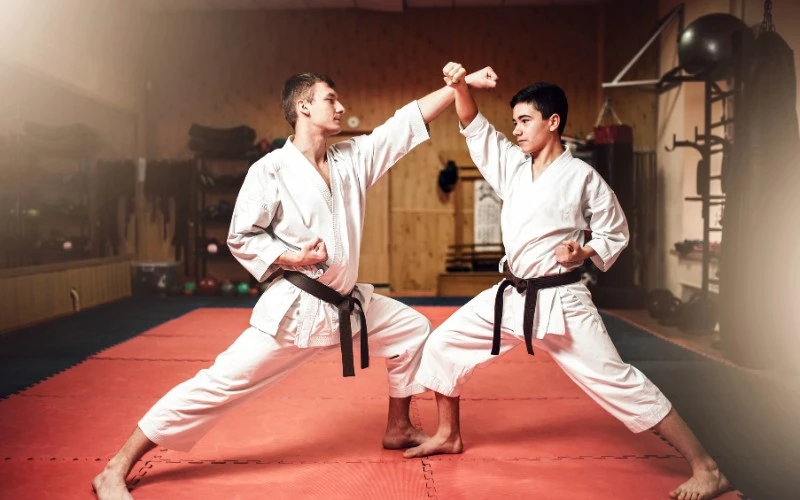
The roots of kickboxing can be traced back to ancient times when various forms of striking combat were practiced in Asian countries. These early forms laid the groundwork for what would later evolve into modern kickboxing. However, it wasn’t until the mid-20th century that kickboxing as we know it today began to take shape.
In the 1960s, kickboxing emerged as a sport in Japan, influenced by karate and Muay Thai techniques. It quickly reached the United States in the 1970s, gaining international popularity in the 1980s and 1990s. This newly formed sport combined traditional martial arts and boxing elements, creating a unique blend emphasizing agility and power.
As kickboxing grew in popularity, it absorbed techniques from various martial arts disciplines, including Karate, Muay Thai, and Taekwondo. These influences gave rise to different kickboxing styles, each with its own rules and techniques.
For example, American Kickboxing is known for powerful punches but has fallen out of favor due to vulnerability to leg kicks. Conversely, Muay Thai incorporates devastating elbow and knee strikes, while Dutch Kickboxing emphasizes a powerful punching game combined with low kicks.
The evolution of kickboxing has also given rise to different rule sets, with Muay Thai being a subset of kickboxing but not all kickboxing styles being considered Muay Thai.
Kickboxing training has gradually become standardized across most gyms using the label but varying widely in focus depending on the style. Like martial arts, which have philosophies and methods, so does each kickboxing style.
Embracing Diverse Techniques
Kickboxing has evolved into a diverse tapestry of techniques that cater to different strengths and preferences. Whether one favors quick footwork or power-packed punches, there’s a style of kickboxing that suits them.
“As we continue exploring the intricacies of kickboxing’s evolution, it becomes clear that what makes this discipline unique is its fusion of various martial arts techniques to create an explosive and dynamic combat sport.”
Now that we’ve uncovered the rich tapestry of techniques woven into the fabric of kickboxing’s evolution, we’ll further delve into how these styles express themselves within different methodologies and philosophies.
Exploring Techniques in Kickboxing

In kickboxing, the mastery of a variety of striking techniques is crucial. From powerful punches to precise kicks, knee strikes, and elbow strikes, each element demands a unique level of skill and precision, requiring a combination of strength, speed, and agility.
Striking Techniques
Each type of strike serves both offensive and defensive purposes. For instance, powerful punches are used to disorient opponents or create openings for an attack, while quick and effective kicks help maintain distance or counter an opponent’s advance. It’s not just about throwing punches and kicks; it’s also about knowing when to use them to gain an advantage in the fight.
Knee and elbow strikes are more advanced attacking techniques used in close combat. These techniques can be particularly useful when fighters engage at a closer range, allowing for swift and unexpected attacks that catch opponents off guard. Mastery of these striking techniques is crucial for any kickboxer as they form the foundation for offensive maneuvers during competition.
Footwork and Movement
Proficient footwork is crucial in delivering and evading strikes effectively. It allows fighters to maintain balance, control distance from their opponent, and execute precise strikes while dodging incoming attacks.
This means that footwork is not just about moving around—it’s about controlling the fight through time and space. Pivoting, shuffling, and swift directional changes are key aspects of footwork that allow kickboxers to reposition themselves strategically to their opponents.
Effective footwork enables fighters to move with purpose, making it challenging for opponents to predict their next move. Advanced fighters use footwork to set up angles for attacks, creating opportunities to strike without being hit.
Defensive Maneuvers
In addition to striking techniques and effective footwork, kickboxers must also master defensive maneuvers. This includes a variety of defensive strategies such as blocking, parrying, and evasion techniques that minimize the impact of opponents’ strikes.
It’s important to point out that defense involves physical movements and mental acuity—the ability to read an opponent’s intentions quickly and react accordingly. Quick reflexes combined with spatial awareness play a significant role in developing effective defensive maneuvers in kickboxing.
Mastering these defensive techniques helps protect against incoming strikes and sets the stage for counterattacks.
Understanding the profound importance of these techniques in kickboxing demonstrates the depth of skill and strategic thinking required by practitioners. It’s not just about delivering strikes; it’s about mastering the art of movement, defense, and attack—creating a symphony of motion within the confines of the ring.
These intricate techniques lay the groundwork for integrating discipline into every aspect of kickboxing training. Let’s delve into how discipline becomes the cornerstone of this martial art.
The Role of Discipline in Kickboxing

Discipline is fundamental to kickboxing training. It extends beyond mastering punches and kicks; it encompasses mental focus, perseverance, and respect. Picture a kickboxer with strength and skill but lacking discipline. In the heat of battle, they might lose control of their emotions, compromising their technique and decision-making—a scenario where discipline comes into play.
Discipline isn’t solely about adhering to a training schedule or gym rules; it’s about self-control, pushing through fatigue, staying focused, and maintaining composure no matter how tough things get. In the ring, when breathing hard and feeling tired, discipline is what keeps you going.
It’s comparable to studying for an exam – consistent daily effort leads to success. Each kickboxing session presents an opportunity for skill enhancement and personal growth.
When facing an opponent, discipline allows kickboxers to remain composed under pressure. It teaches them to control their fear, frustration, or anger to make split-second decisions without losing their cool. This mental fortitude sets kickboxing apart from more straightforward physical activities.
Moreover, disciplined practitioners show respect not only for opponents but also for the traditions and philosophy of martial arts. They understand that every move should be executed with intention and control, not aggression or malice. This mindset is vital for maintaining harmony within the martial arts community and promoting sportsmanship.
This mental strength can have significant implications beyond the gym. The determination and commitment instilled by discipline can positively influence everyday life—whether at school, work, or in relationships.
Discipline lies at the heart of kickboxing, shaping combat prowess, personal development, and character building. It elevates kickboxing beyond physical activity to an art form that demands respect, focus, and unwavering commitment.
Comparing Kickboxing with Other Martial Arts
When comparing kickboxing with other martial arts, it’s important to understand the key differences and similarities. While kickboxing shares elements with traditional martial arts, such as using body movements to strike an opponent and focusing on mental strength, significant distinctions set it apart.
Traditional martial arts encompass many styles that focus on physical well-being, character building, overcoming obstacles, and spiritual development. These disciplines typically emphasize self-defense, philosophical teachings, and honor, serving as a holistic approach to combat and personal growth.
In contrast, kickboxing strongly emphasizes aggressive striking techniques and competitive bouts, with a primary objective of causing damage to opponents within a defined competitive context.
While traditional martial arts advocate for self-control and non-violent conflict resolution, kickboxing is designed for competitive sportsmanship and aggressive combat. This difference in ethos often sets the tone for training approaches between the two disciplines.
In karate or taekwondo classes, students are encouraged to practice self-discipline and respect for their opponents, which may involve controlled sparring sessions focused on technique rather than inflicting harm.
Meanwhile, kickboxers train extensively for high-intensity bouts where the goal is to outmaneuver and overpower opponents using a combination of punches, kicks, and footwork to inflict damage and secure victory within a competitive setting.
Another distinction between traditional martial arts and kickboxing is their respective training methods. While both require physical conditioning, kickboxing focuses on stamina-building exercises for competitive fighting.
In contrast, conventional martial arts may include more meditative practices that foster mental and emotional resilience through meditation and self-reflection.
By understanding these foundational differences in approach and training between kickboxing and traditional martial arts, we gain valuable insights into the unique characteristics that set kickboxing apart from its more holistic counterparts.
With a clear understanding of the distinctive elements that differentiate kickboxing from traditional martial arts, let’s explore how kickboxers are perceived within the broader community.
Perception of Kickboxers in the Martial Arts World

Kickboxers are often seen as the thoroughbreds of combat sports—a transcendent meld of technique, power, and endurance. Their training regimen is widely recognized for its intensive nature and ability to produce athletes known for their exceptional physical prowess.
As a result, these athletes have garnered respect within the martial arts community commensurate with their extraordinary dedication and proficient combat skills.
Their status as elite athletes extends beyond their physical capabilities. They have become emblematic of unwavering commitment to discipline, technical proficiency, and a strong work ethic. Often, mastering not just one but a combination of martial arts forms gives them an edge that is a testament to their abilities.
Kickboxing shares some common ground with traditional martial arts, such as using body movements to strike an opponent and focusing on mental strength. This sets them apart from traditional martial artists.
In the martial arts world, kickboxers are admired for their superior physical condition, technical proficiency, and intense training, making them formidable opponents in the ring or on the mat.
They receive high regard from peers for their athleticism, skill level, and ability to endure grueling competitions. They push the boundaries of human capability regarding speed, agility, and power—a triad that commands respect.
Despite being inherently different from traditional martial arts in philosophy and approach, kickboxers are widely esteemed for their contributions to the combat sports arena. Their overwhelming presence has significantly impacted how competitive fighting sports are viewed, valued, and practiced globally.
The recognition kickboxers receive for their remarkable physical abilities demonstrates how they have successfully bridged the gap between tradition and innovation in the combat sports world. Their undeniable talent, dedication to training, and technical proficiency contribute to their esteemed status within the martial arts community.
In summary, kickboxers have carved a significant niche within the martial arts world through their outstanding physical capabilities and commitment to excellence.
Kickboxing is a testament to the evolving landscape of combat sports and has secured its place as a respected form of athletic pursuit within the broader context of martial arts. Kickboxing’s impact extends beyond physical exertion, embodying discipline, skill, and determination.