

Kickboxing requires a unique set of stretches to maximize performance. These exercises boost flexibility and aid in injury prevention, preparing your body for the high demands of this intense sport.
Do you think it’s just a standard warm-up? Not at all. Kickboxing stretches go beyond the usual, targeting specific muscle groups used heavily in the sport. So, what’s next? Let’s dive right into essential warm-up moves.
The best stretches for kickboxing include dynamic movements such as leg swings, high knees, and torso twists as part of the warm-up. Following the workout, incorporating static stretches like long lunges, pigeon pose, and hamstring stretch can help enhance leg flexibility, improve recovery, and contribute to better kickboxing performance.
Warm Up: Essential Moves

Give your body the necessary preparation before diving into the intensity of a kickboxing workout or match. Think of your muscles like rubber bands—if you stretch them out slowly, they flex more easily without snapping. A thorough warm-up is a gentle stretch that keeps your muscles flexible and resilient during high-demand kickboxing activities.
We have dynamic exercises designed to pump your heart and blood to the muscles. These movements, including jumping jacks, high knees, lunges, and arm circles, increase blood flow to the muscles and raise the body’s core temperature, making them more pliable and less prone to strains or tears during vigorous movements.
Dynamic Stretching Exercises
Here are some key dynamic stretches:
- Jumping Jacks: Engages the entire body and increases heart rate.
- High Knees: Focuses on the lower body, specifically the quadriceps and hip flexors.
- Lunges: Stretches the major muscle groups in the lower body while engaging the core for stabilization.
- Arm Circles: Warms up the shoulders and upper body for punching movements.
Each movement promotes increased flexibility, range of motion, and coordination. Incorporating these dynamic exercises into your warm-up routine sets the stage for a safer, more effective workout.
Now that we’ve covered dynamic exercises as part of your kickboxing warm-up routine, let’s explore static stretching exercises and their role in preparing your body for peak performance.
Key Stretches for Increased Flexibility
Flexibility plays a crucial role in kickboxing. It enhances performance and reduces the risk of injuries. Executing high kicks, quick footwork, and agile defensive movements is challenging without proper flexibility. Here are some key stretches that specifically target the muscle groups used in kickboxing.
Leg Stretches
When it comes to kickboxing, your legs are your powerhouse. Enhancing the flexibility and range of motion in your hip and hamstring muscles is essential for executing powerful kicks.
To achieve this, high kicks are an excellent stretch that can help improve your kicking ability by allowing you to raise your leg higher with ease. By working on the flexibility of these muscles, you create the potential for more explosive and dynamic movements without the risk of strain or injury.
Additional note: Starting with a full warm-up before kickboxing is crucial to gain flexibility and prevent injury. FightCamp Trainer Flo Master recommends a warm-up sequence of jumping jacks, squats, mountain climbers, and jump rope for 2 minutes.
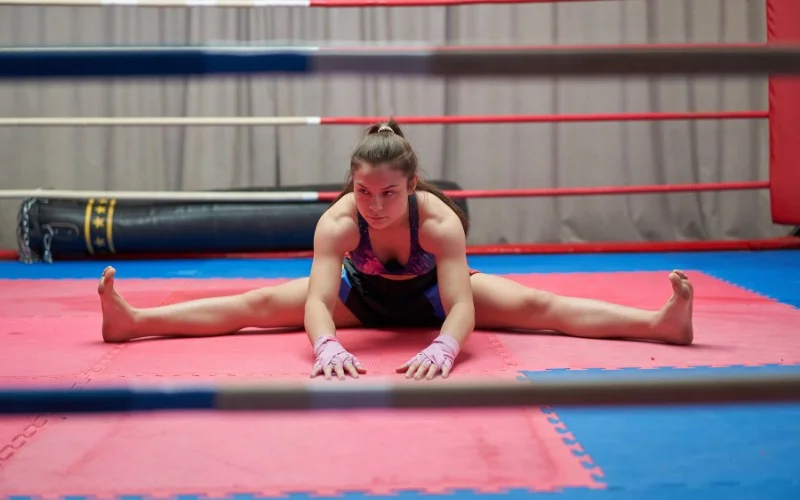
Incorporating front and side splits into your stretching routine can significantly improve the flexibility of your inner thigh and groin muscles, which are vital for achieving a wider range of motion for various kicking techniques.
These stretches may initially seem challenging, especially if you’re new to them. Still, with consistent practice, you’ll gradually notice a marked improvement in your flexibility and agility during training and sparring.
Upper Body Stretches
The upper body is equally important in kickboxing, as it is pivotal in delivering powerful punches and executing defensive maneuvers. Performing arm circles is an effective way to stretch and warm the shoulders and upper back muscles to maintain optimal mobility and flexibility in this region.
This simple yet impactful stretch helps improve the fluidity and range of motion required for punch combinations and quick defensive movements.
Another critical upper body stretch is the triceps stretch. Loosening the triceps and shoulders through this stretch is vital for enhancing punching capability and facilitating swift blocking movements during sparring sessions. With improved flexibility in these areas, you’re better equipped to execute precise strikes with controlled force while minimizing the risk of muscle strain or tension.
By incorporating these specific stretches into your routine, you’re enhancing your flexibility and actively investing in injury prevention and improved performance. Consistency is key, so be patient with yourself as you work on gradually improving your flexibility through these targeted stretches.
Visit Rob Kaman for a comprehensive list of kickboxing-specific stretches tailored to elevate your training regimen.
As you now appreciate the importance of specific stretches in kickboxing that enhance flexibility and reduce injury risk, let’s delve into “The Role of Stretching in Kickboxing.
The Role of Stretching in Kickboxing
Kickboxing requires constant movement—punches, kicks, shuffling, and pivoting. But what often gets overlooked is the importance of having a body that can comfortably carry out these movements without stress or injury. This is where stretching comes in; think of it as the preparation phase before diving headfirst into training or competition.
Flexibility is at the core of martial arts and combat sports. It’s the ability to extend our limbs and other body parts through an increased range of motion. Without proper flexibility, executing high kicks with precision becomes challenging.
When you can’t kick high enough, you limit your offensive repertoire. Flexible muscles move more efficiently and are less likely to be strained during rigorous activities.
Stretching improves muscle elasticity, which isn’t just about being bendy. Elastic muscles are quick to respond to movement and adaptability. In kickboxing, swift, dynamic movements are necessary to evade opponents’ attacks and deliver powerful strikes. Enhanced muscle elasticity equips kickboxers with the agility to swiftly switch between defensive and offensive positions.
Regular flexibility exercises lead to an extended range of motion, setting the foundation for seamless execution of kicks, punches, and defensive maneuvers. Proper stretching ensures free movement across different planes and angles, reducing physical strain and the risk of injury.
Reducing the risk of injury is paramount when preparing for a demanding training session. Due to the rapid and powerful movements involved, kickboxing places significant stress on the joints, tendons, and muscles. By integrating a thorough stretching routine into your training regimen, you’re essentially creating a safeguard against potential injuries.
Professional kickboxers rely on their fighting spirit and proper conditioning for peak performance. Flexibility through regular stretching sessions primes the body for intense physical activity and boosts recovery after workouts by reducing muscle soreness and increasing blood flow to tired muscles.
In essence, stretching isn’t just a fleeting activity before kicking off training—it’s a fundamental pillar that underpins peak performance, injury prevention, and overall well-being in kickboxing. By making room for regular flexibility exercises in your regimen, you’re optimizing your physical prowess and reinforcing your durability as a kickboxer.
With the understanding of how stretching plays a crucial role in kickboxing performance and injury prevention, let’s now focus on exploring the myriad benefits one can derive from incorporating consistent stretching routines.
Benefits You Can Get From Stretching
During a kickboxing session, it’s not just about throwing powerful punches and kicks; it’s about moving confidently and with control. Flexibility is critical for performing these moves efficiently. But what exactly does stretching do for you?
Injury Prevention
When your muscles are flexible, they can move through their full range of motion without getting strained or injured. Regularly stretching your muscles helps maintain flexibility and reduces the risk of strains, sprains, and muscle tears during kickboxing. This is particularly crucial when executing advanced moves such as high kicks and dynamic footwork that demand high flexibility.
Here’s a clear example: When you throw a powerful roundhouse kick, your leg muscles must be strong and flexible to execute the movement smoothly without any strain. Rigid muscles can lead to overextension, increasing the risk of injury. In contrast, flexible muscles allow for full extension without the risk of tearing or straining.
Many seasoned kickboxers emphasize a regular stretching routine as an integral part of their training, as it minimizes injuries and enhances overall performance.
Improved Performance
Most people think of strength and speed as essential components of kickboxing performance—and they are! But flexibility is equally important. Stretching improves not just muscle flexibility but also muscle elasticity, which in turn contributes to stronger and more efficient movements during kickboxing activities.
Consider this analogy: Just like a rubber band stretches easily when it’s warmed up, flexible muscles are better able to handle sudden movements and generate powerful strikes during kickboxing. They allow for a wider range of motion, which means more force behind strikes, leading to improved kicks and punches.
Now picture this: A punch that reaches its target faster because the shoulders and arms are looser and more flexible. This directly translates into swifter strikes and overall better performance in the ring.
Faster Recovery
After an intense kickboxing workout, soreness sets in, making every step feel like a chore. Post-exercise stretching reduces muscle soreness by promoting blood circulation, which enhances recovery after rigorous kickboxing sessions.
Just imagine: After a long training day, gentle stretching helps flush toxins from your muscles while replenishing them with oxygenated blood. This reduces stiffness and soreness, allowing your body to recover faster between sessions.
Incorporating stretching into your kickboxing routine can be likened to adding high-quality oil to an engine – It enhances performance while ensuring longevity.
As we’ve seen, stretching is pivotal in enhancing kickboxing abilities. Let’s now explore specific techniques to elevate your kickboxing performance further.
Enhancing Your Kickboxing Performance

Kickboxing demands agility, strength, and precision. Flexibility is far from a fancy extra—it’s necessary. Let’s uncover how improving your flexibility through regular stretching can significantly enhance your kickboxing performance.
Your body relies on a wide range of motion as you reach, duck, pivot, and strike in the ring or during training. Stretching helps improve the elasticity and flexibility of muscles and tendons, allowing you to execute these movements more fluidly and easily. This increased flexibility can allow for sharper, faster kicks and punches.
It contributes to increased speed and power in your strikes and bolsters your balance and coordination—essential for executing precise moves and defensive stances during sparring and competitions.
Imagine throwing high kicks without feeling tightness or strain or pivoting and dodging hits with greater finesse. You must develop better body awareness and motor control through consistent stretching. Then, they often underestimate the importance of flexibility in kickboxing, assuming it’s all about power.
However, flexible muscles offer more than just mobility; they also play a critical role in injury prevention. Enhanced flexibility reduces the risk of muscle strains or tears during high-impact training sessions or demanding fights.
Inflexible muscles can lead to unnecessary strain when executing high kicks or powerful strikes, hindering performance and increasing the likelihood of injury.
Therefore, incorporating a stretching routine into your kickboxing regimen is essential for improving your physical prowess and safeguarding against unwanted injuries that could sideline your training and progress.
By incorporating regular stretching into your kickboxing routine, you’re enhancing the technical aspects of your performance and fortifying the foundation of physicality that underpins every successful kickboxer’s journey.
Discovering a realistic approach to gradual improvement in flexibility can help you unlock new levels of agility and strength in your kickboxing journey.
Gradual Improvement in Flexibility: A Realistic Approach
Flexibility isn’t something you can force—it takes time and consistency. In kickboxing, becoming more flexible will help you execute higher kicks with better control, move more fluidly, and punch with improved form. It’s not about being able to do the splits on day one; it’s about making steady progress.
Imagine your body is like a rubber band. It will snap if you try to stretch it too far or fast. But if you gently pull it each day, it becomes more flexible over time. This is exactly how our muscles and tendons work, too. We gradually build flexibility by regularly stretching and challenging our range of motion.
It’s not about rushing things. It’s about creating the conditions for improvement through consistent effort.
Starting with small improvements before gradually moving on to bigger challenges sets a solid foundation for long-term success in kickboxing. It’s like building a strong house—laying each brick carefully makes the structure sturdy and reliable.
For instance, when starting a new stretching routine or exercise regimen, it’s important to listen to your body while gradually increasing the difficulty of the stretches. Your muscles and tendons need time to adapt and grow stronger, so pushing too hard too soon may lead to injury.
Think of it as learning a new language or mastering a musical instrument. You wouldn’t expect to become fluent overnight or perform a complex piece perfectly after just a few days of practice, right? Similarly, flexibility is a skill that develops steadily over time with dedication and patience.
By approaching flexibility improvement with a realistic mindset and understanding that incremental progress is the key to success, kickboxers can cultivate a sustainable approach towards their training, which, in turn, contributes to their overall performance enhancement in the sport.
In conclusion, taking a patient and gradual approach to improving flexibility lays the groundwork for long-term success in kickboxing, ensuring steady advancements in technique and overall performance.